
Powered By



Sleep apnea is common in people with obesity. In a study of 3,330 adults with obesity published in eClinicalMedicine, almost 75 percent had obstructive sleep apnea (OSA). Sleep apnea also can lead to more weight gain, creating a cycle that’s hard to break.
Keep reading to find out more about how sleep apnea and obesity are connected — how obesity causes sleep apnea, how sleep apnea increases your risk of other health problems, and how treating sleep apnea can improve your quality of life.
People with sleep apnea stop and start breathing while they’re asleep. Obstructive sleep apnea is the most common type. In OSA, the upper airway is narrowed or blocked, reducing oxygen levels. This lack of oxygen can harm the brain and other parts of the body.
Obesity can cause OSA because excess weight can press on the throat. Chest and belly fat can also make it harder for the lungs to expand fully. Breathing muscles may get weaker, and airflow can decrease.

Other factors can also raise the risk of obstructive sleep apnea. Men are two to three times more likely than women to develop OSA, according to Mayo Clinic, and it tends to develop in older adults. Heart disorders and stroke also make OSA more likely.
Sleep apnea makes it hard to get good sleep. One of the most noticeable effects is daytime sleepiness. “I just need to stop falling asleep during the day,” one MyObesityTeam member said.
Another member replied, asking, “Have you checked to see if you have sleep apnea? I almost wrecked on the expressway — that’s when I had a sleep study done.”
Lack of sleep can cause irritability and depression. Sleep apnea also leads to insomnia, dry mouth, and headaches.
Sleep apnea can affect a partner’s sleep, too. Sleep-disordered breathing often causes loud snoring. A partner might also notice that you gasp for air or even stop breathing while you sleep.
Obstructive sleep apnea isn’t just annoying for you and your partner — it can lead to long-term effects on your health. Sleep apnea can cause or worsen several obesity-related medical conditions, such as:
Sleep apnea can also worsen obesity by causing weight gain. Sleep deprivation from OSA raises ghrelin, a hormone that increases appetite, and lowers leptin, a hormone that tells you when you’re full. Poor sleep also makes it harder to get the physical activity that can help maintain or reduce body weight.
Sleep apnea is usually diagnosed with a sleep study. A sleep disorder specialist will set you up with equipment that tracks your breathing while you sleep. This equipment also measures other signs of sleep quality, such as heart activity and blood oxygen levels. Sleep studies can be done in a special sleep medicine center, or your sleep disorder specialist might give you equipment to use at home.
If your results suggest sleep apnea, your sleep specialist may recommend certain lifestyle changes or treatments. They might also refer you to other doctors, such as an ear, nose, and throat specialist to check for blockages. They might also recommend seeing a neurologist or cardiologist if your nerves or heart could be causing the problem.
Sleep apnea doesn’t have to last forever. Many effective treatments can help make breathing easier, get better sleep, and improve your health and quality of life.
Sleeping on your side is often the first step for mild sleep apnea or if the condition gets worse when you lie on your back. To keep from rolling onto your back, some doctors suggest sleeping while wearing a backpack.
Weight loss can help ease or even get rid of obstructive sleep apnea by taking pressure off the airway. “Test results for sleep apnea are back. I did what the doctor said was highly unlikely: I lost enough weight for the sleep apnea to go away,” one MyObesityTeam member reported.
Other changes, like quitting smoking or cutting back on alcohol, can cut down on obstructive sleep apnea symptoms. If you have nasal allergies, your doctor might suggest ways to control those symptoms.
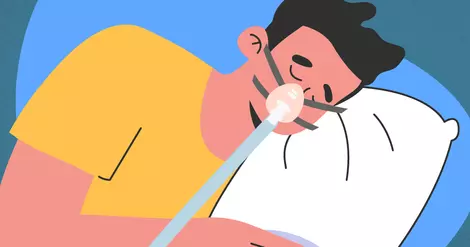
Most people with sleep apnea will need more than lifestyle changes. The most common treatment is a continuous positive airway pressure (CPAP) machine. This small machine pushes air through a tube and forces it into a mask you wear over your nose or mouth — or both. The higher pressure in the air helps keep your airway open and makes it easier to breathe.
It can be hard to get used to CPAP therapy. Today’s machines are more comfortable, though, with features such as automatic air pressure adjustments and heated humidifiers. Finding the right mask style can also make a big difference.
One member of MyObesityTeam shared their CPAP success story: “I had lost 100 pounds and stopped using my CPAP, but apparently still needed it. I fought the masks till I got the kind that’s just a soft strap with little nasal pillows. I can still read with it on and forget it’s there.”
If a CPAP machine isn’t right for you, an oral device might help keep your airway open while you sleep. Most work by pulling your lower jaw forward, which also moves your tongue and opens your airway. These devices fit over your teeth.
If your teeth aren’t strong enough, some devices use suction to gently pull the tongue forward. You can buy some oral appliances over the counter, but those made by a dentist or an orthodontist are usually more effective.
The U.S. Food and Drug Administration (FDA) has approved the glucagon-like peptide-1 (GLP-1) drug tirzepatide (Zepbound) to treat moderate to severe obstructive sleep apnea in adults with obesity. In a clinical trial, adults who took this medication had fewer stops in breathing and better oxygen levels.
Surgery may be an option if other OSA treatments haven’t worked and if jaw structure problems are contributing to sleep apnea. Some people benefit from surgery that brings the jaw forward to make more room for the tongue. Surgeons also can remove or reshape tissue in the mouth and throat, including the tonsils and adenoids. In some adults, these surgeries can reduce how often the airway closes and improve OSA and snoring.
Another option is hypoglossal nerve stimulation. A small device placed under the skin sends gentle signals to the nerve controlling the tongue during sleep, which helps keep the airway open. This treatment is used for adults with moderate to severe OSA who can’t use CPAP therapy.
For some people with obesity, bariatric (weight loss) surgery can reduce sleep apnea. Losing a lot of weight can open the airway and sometimes lead to remission (disappearance of symptoms). You’ll still need follow-up sleep studies to see how much your sleep apnea has changed.
Very severe cases of sleep apnea may require a tracheostomy — surgery to place a tube in the neck. During the day, the opening to the tube stays closed, but at night, it’s opened to let air in.
On MyObesityTeam, people share their experiences with obesity, get advice, and find support from others who understand.
How do you manage sleep apnea? What do you do to improve your sleep health? Let others know in the comments below.
Get updates directly to your inbox.





 Continue with Facebook
Continue with Email
Continue with Facebook
Continue with Email
Continue with Facebook
Continue with Email
Continue with Facebook
Continue with Email
Become a member to get even more





 Join
Join

 Your Privacy Choices

This is a member-feature!
Sign up for free to view article comments.
We'd love to hear from you! Please share your name and email to post and read comments.
You'll also get the latest articles directly to your inbox.